
Rudyard Kipling was initiated at twenty, in Lahore, in a lodge where the man who entered him was a Hindu reformer, the man who passed him was a Muslim, the man who raised him was an Englishman, and the Tiler was an Indian Jew. He spent the rest of his life writing about what that room was like.
Lahore, 5 April 1886
Kipling was initiated on 5 April 1886 in the Lodge of Hope and Perseverance No. 782, English Constitution, at the Masonic Hall in Anarkali, Lahore.
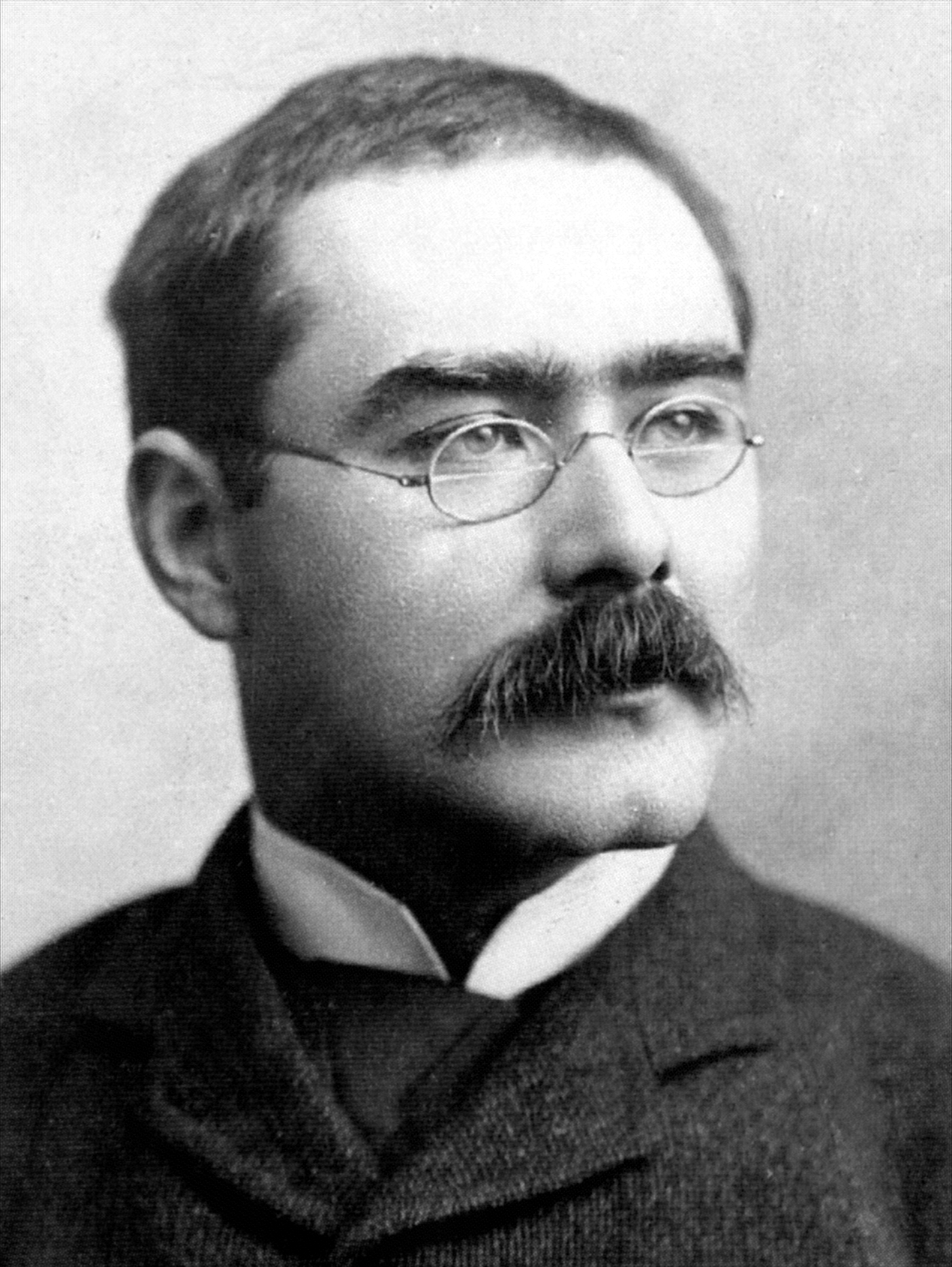
He was twenty years and six months old — under the required age — and a special dispensation was obtained so that the lodge could have him. He was a newspaperman on the Civil and Military Gazette, thin, bespectacled, and already writing the verse and stories that would make him, by thirty, the most widely read author in the English-speaking world.
He served the lodge as Secretary, and in 1925, nearly forty years later, he still described it in a single sentence he clearly enjoyed writing: that Hope and Perseverance included brethren of at least four creeds.
The specifics are worth having. He was entered by a member of the Brahmo Samaj, a Hindu reform movement; passed by a Muslim; raised by an Englishman. The lodge's Tiler was an Indian Jew.
Consider the setting. British India in 1886 was a society organized around racial and religious separation, in which the club, the mess, the church, and the cantonment all sorted men rigorously. The lodge did not.
“The Mother-Lodge”
Eight years later, in Vermont, Kipling wrote the poem the Craft has never let go of. He reportedly wrote it in a single day, 29 October 1894, while Arthur Conan Doyle was staying with him.
The Mother-Lodge is written in the voice of a working Englishman recalling his lodge in India, and it does something almost no poem about brotherhood manages: it names people. The Sergeant, the Bo'sun, the Jew, the Hindu, the Sikh, the Muslim — each identified by trade and creed, each in his place in the room.
The poem is honest about the limits, too, and that is why it survives. Outside the lodge, the speaker acknowledges, the old distinctions resumed — the rank, the caste, the color. Inside, on the level, they did not. Kipling does not claim the lodge fixed the world. He claims it was a room where the world's rules were suspended for an evening, and that the men who sat in it knew exactly how rare that was.
Its closing wish — to be back among his own people, whoever and whatever they were — is on more lodge room walls than any other line of Masonic verse.
The Man Who Would Be King
Published in 1888, two years after his initiation, Kipling's great novella turns on Freemasonry as a plot mechanism.
Two British adventurers, Daniel Dravot and Peachey Carnehan, set out to make themselves kings in Kafiristan. They succeed largely because the local priesthood recognizes Masonic signs and a Masonic mark, and takes Dravot for a god. The narrator, a newspaperman in India who is himself a Mason, is drawn in when the two men invoke the fraternity on him.
It is a cautionary tale, and a sharp one. Dravot's ruin comes when he forgets that he is a man playing at godhood — when he decides the deference is owed to him rather than to the office he has usurped. The story is at least as much about the temptations of empire as about the Craft, and it is not flattering to either.
Kipling used Masonry throughout his fiction and verse besides — in stories, in the war poetry, in Kim, where a Masonic certificate is among the papers that identify the boy's dead father.
The Silent Cities
The last part of Kipling's life gives his Masonry a weight nothing in the Indian years foreshadowed.
His only son, John Kipling, was rejected for military service on account of his terrible eyesight. Kipling, who had spent years urging young men to enlist, used his influence to get the boy a commission in the Irish Guards. John was killed at the Battle of Loos in September 1915, aged eighteen. His body was not identified for decades.
Kipling never publicly said what that cost him, but he did the one thing available to him: he went to work for the Imperial War Graves Commission, and stayed at it for the rest of his life — choosing the words that went on the graves and monuments of a generation.
The Stone of Remembrance in the war cemeteries reads Their Name Liveth For Evermore. Kipling selected it. The headstones of the unidentified read A Soldier of the Great War / Known unto God. Kipling wrote it — and then his own son lay under one.
He was a founding member of Builders of the Silent Cities Lodge No. 12, formed among the men of the War Graves Commission, and he kept his membership until his death in 1936. The lodge's name was his suggestion.
The silent cities are the war cemeteries. He called the men who laid them out builders, and he joined their lodge.
The Complicated Part
Kipling is not a simple figure to praise, and pretending otherwise would be a poor tribute to a man who despised cant.
He was an imperialist who wrote lines that have rightly become bywords for the racial arrogance of the age, and his politics hardened as he aged. Readers have argued about him for a century, and will continue to.
What is also true is that the same man, at twenty, sat in a lodge in Lahore where a Hindu, a Muslim, a Jew, a Sikh, and an Englishman met on the level — and that of everything in his enormous body of work, it was that room he returned to and wrote about with unmistakable love. He knew what the world outside the door was like. He had helped write its case. And he kept saying, in poem after poem, that the room was better.
Whatever else he was, on that subject he told the truth.