
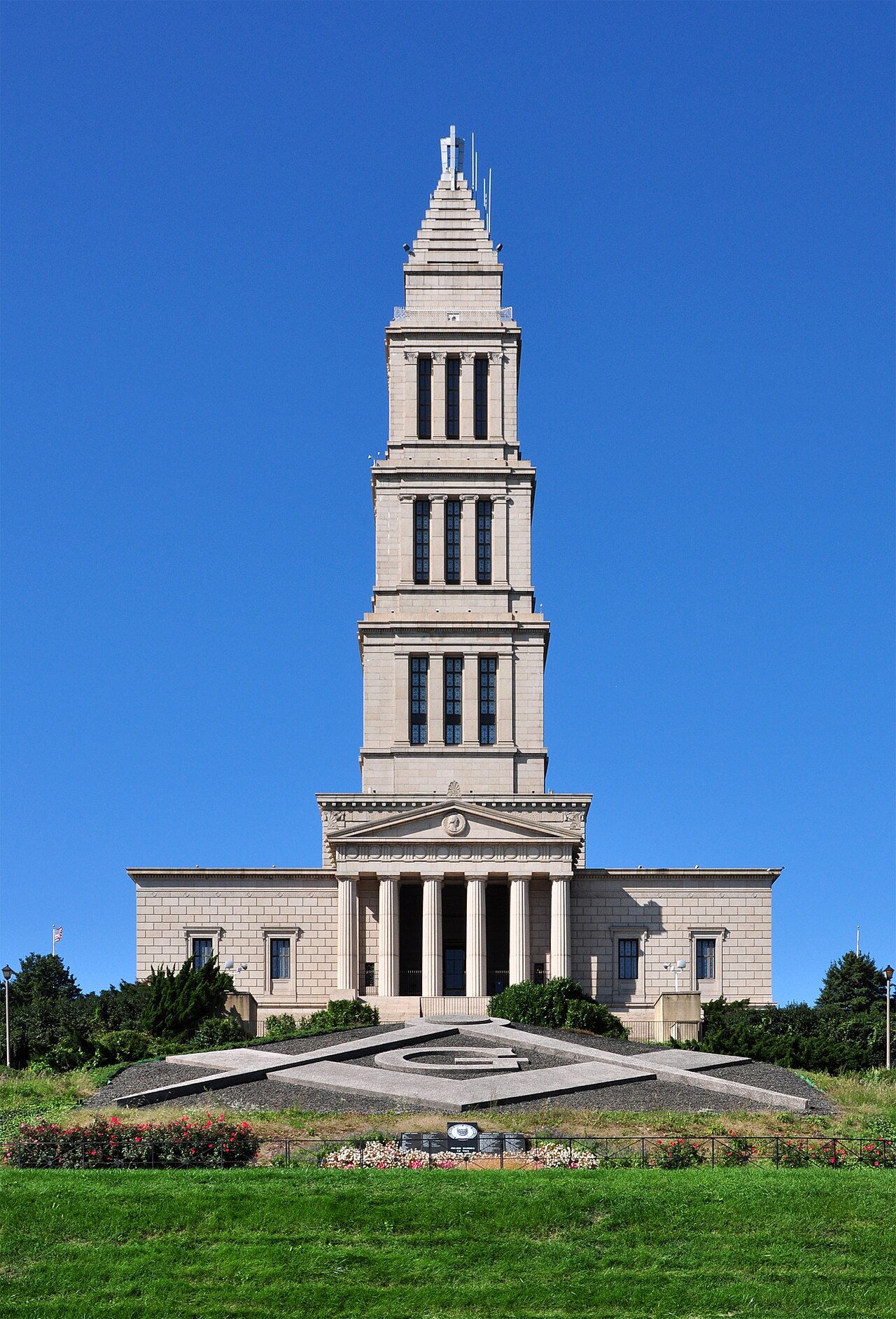
There is a stone lighthouse on a hill in Alexandria, Virginia, more than three hundred feet tall, visible from the Potomac and from half of Washington. It was built by American Freemasons with their own money, during the Great Depression, without borrowing a dollar — and it was built mainly because of a fire.
The Fire
Alexandria–Washington Lodge No. 22 is the lodge in which George Washington held membership, and of which he served as Worshipful Master. It held what no other lodge on earth held: his Masonic possessions, his correspondence, objects from his household, the accumulated relics of the most consequential Mason in American history.
In 1871 the building caught fire. Much of the collection was lost. What survived was pulled out by hand and afterward kept in whatever conditions a small city lodge could manage — which is to say, in a wooden building with no fireproofing, no climate control, and no security worth the name.
Every Mason who thought about it understood the problem. Objects that belonged to the whole country were sitting in a room that could burn down twice.
Twenty-Six Grand Lodges
On 22 February 1910 — Washington's birthday — Grand Master Joseph W. Eggleston of Virginia invited every Grand Master in the United States to Alexandria. Representatives of twenty-six Grand Lodges came, and there they formed the George Washington Masonic National Memorial Association, to build a fireproof memorial temple to Washington the Mason.
That is a genuinely unusual sentence. American Grand Lodges are sovereign and famously allergic to national projects — the same instinct that killed the wartime proposal to make Washington a national Grand Master and gutted the Baltimore Convention. The Memorial is the rare thing they all agreed to build together, and it remains supported by the Grand Lodges of the United States collectively.
A Lighthouse, Deliberately
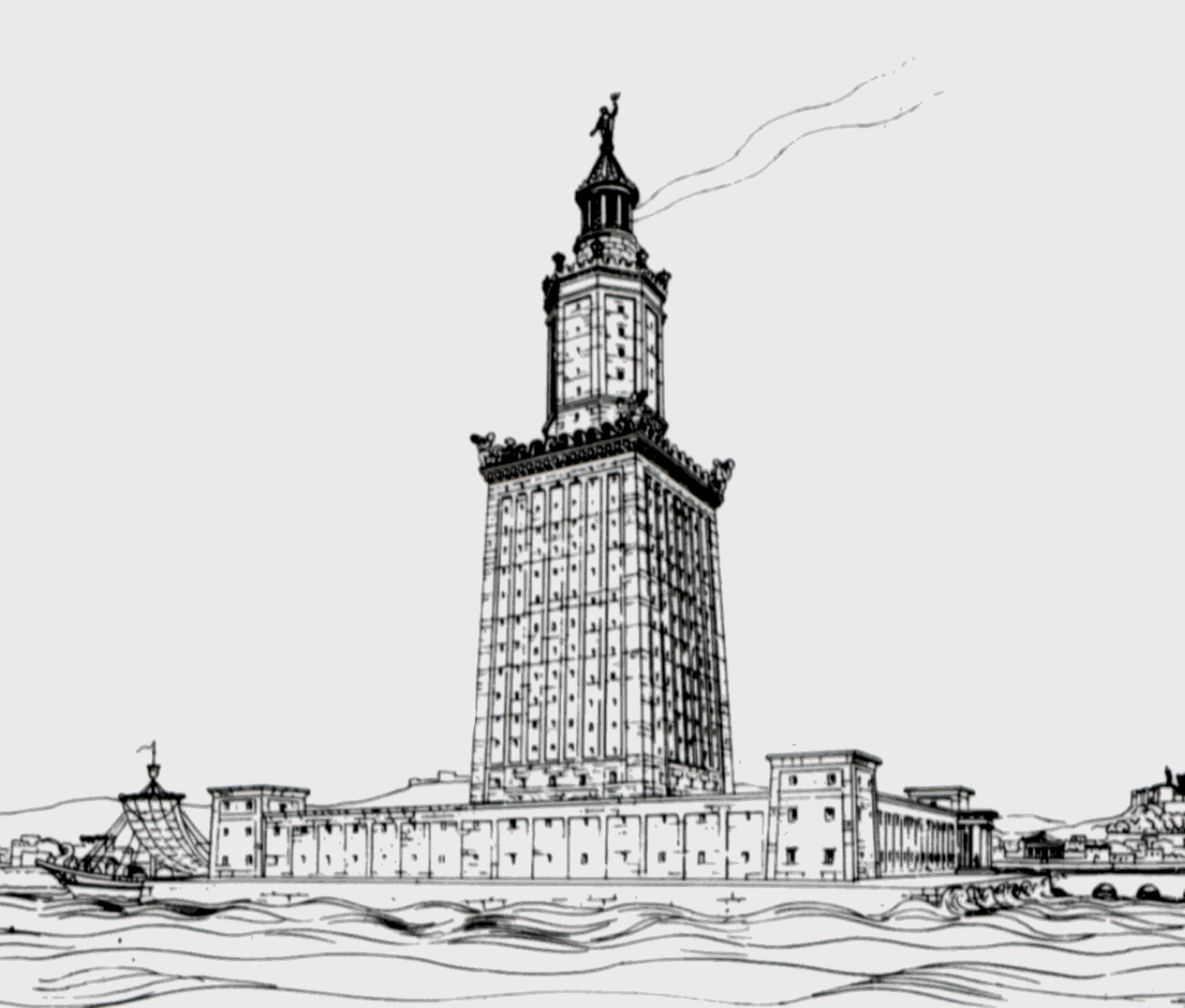
The design took a decade to settle. What the Grand Lodges approved in 1920 was not a temple in the ordinary sense but a lighthouse — modeled on the Pharos of Alexandria, the ancient wonder that stood at the harbor mouth of the other Alexandria and guided ships for centuries.
The pun is intended and the symbolism is not subtle. A lighthouse does not compel anyone. It stands still, keeps burning, and lets men steer by it — which is precisely the claim the Craft makes about moral example, and precisely the role it assigns to Washington.
The architect was Harvey Wiley Corbett, of Helmle & Corbett of New York. The building rises nine stories in stepped tiers to roughly 333 feet, and it sits atop Shuter's Hill — ground that had once been proposed as the site of the United States Capitol itself.
Paid For, Stone by Stone
Ground was broken on 5 June 1922. The cornerstone was laid on 1 November 1923, with President Calvin Coolidge present, former President William Howard Taft — himself not a Mason, though his father and brothers were — and thousands of brethren. Washington's own 1793 trowel was used.
Then came the part that deserves the most respect.
The Association adopted an absolute rule: it would not borrow money. Construction advanced only as far as the funds already collected would carry it, and stopped when they ran out. No mortgage, no bond issue, no debt.
Consider the calendar. The building went up between 1922 and 1932 — which means the second half of it was raised through the onset of the Great Depression, funded by dollar and five-dollar contributions from Masons who were, in many cases, losing their farms and their jobs. They kept sending money, and the Association kept laying stone as it arrived, and the building was finished on time and owed nothing to anyone.
It was dedicated on 12 May 1932, in Washington's bicentennial year, with President Herbert Hoover taking part.
What Is Inside
The Memorial is a working museum, and the collection is extraordinary. Among the objects that survived the 1871 fire and are now safely housed there and at Alexandria–Washington Lodge:
- The trowel Washington used at the Capitol cornerstone on 18 September 1793 — still lent out for cornerstone ceremonies.
- The clock from Washington's bedchamber at Mount Vernon, whose hands were stopped by his physician at the moment of his death on 14 December 1799.
- Masonic aprons, jewels, and lodge furniture associated with him, including material connected to the apron sent from France.
- The lodge's own records, and a broad collection documenting American Freemasonry.
The building also houses a replica lodge room, exhibit halls for the appendant bodies, and an observation deck from which you can see the Capitol, the Washington Monument, and the Potomac — the whole city Washington helped site, from a hill that nearly held its capitol.
Why It Is Worth Knowing About in Pueblo
Two reasons.
The first is practical: it is open to the public, it is a short walk from the King Street Metro, and any Colorado Mason with a day in Washington should go. Non-Masons are welcome; that is the entire point of a lighthouse.
The second is about how the Craft behaves when it decides something matters. Faced with a national obligation, American Masons did not lobby for a federal appropriation. They passed the hat among themselves for twenty-two years, refused to go into debt, and finished the job in the middle of a depression.
That is the same instinct that has a Pueblo lodge funding scholarships out of its own pocket, and the same instinct that built the Shriners hospitals. The Memorial is simply the largest and most visible thing it ever produced.