Colorado had a Grand Lodge fifteen years before it had a state. On 2 August 1861, three lodges scattered across a territory of gold camps and canvas towns met at Golden City and constituted the Grand Lodge of Colorado — the body that would charter Silver State No. 95 thirty-two years later.
Seven Prospectors and a Cottonwood Grove
The Craft arrived in Colorado the way everything else did in 1858: with the gold rush. The first recorded Masonic gathering in the territory took place on 3 November 1858, when seven Freemasons among the prospectors at the mouth of Cherry Creek — the settlement that would become Denver — met together as brethren. They had no lodge room, no charter, and no furniture. They had a territory that did not yet exist and a town that had been laid out weeks earlier.
A year later they had a dispensation. The Grand Lodge of Kansas, whose jurisdiction then nominally reached across the plains to the mountains, authorized them to meet as Auraria Lodge in the frontier settlement of the same name, across the creek from Denver City.
Other camps followed. Golden City Lodge received its charter from Kansas on 17 October 1860. In 1861 the Grand Lodge of Nebraska chartered two more: Summit Lodge at Parkville, a placer-mining town in the Blue River valley, and Rocky Mountain Lodge at Gold Hill, up the canyon from Boulder.
So by the summer of 1861, Colorado Territory had lodges answering to two different Grand Lodges several hundred miles away, in a region where a letter took weeks and a Grand Lodge visitation was out of the question. The remedy was obvious.
Golden City, 2 August 1861
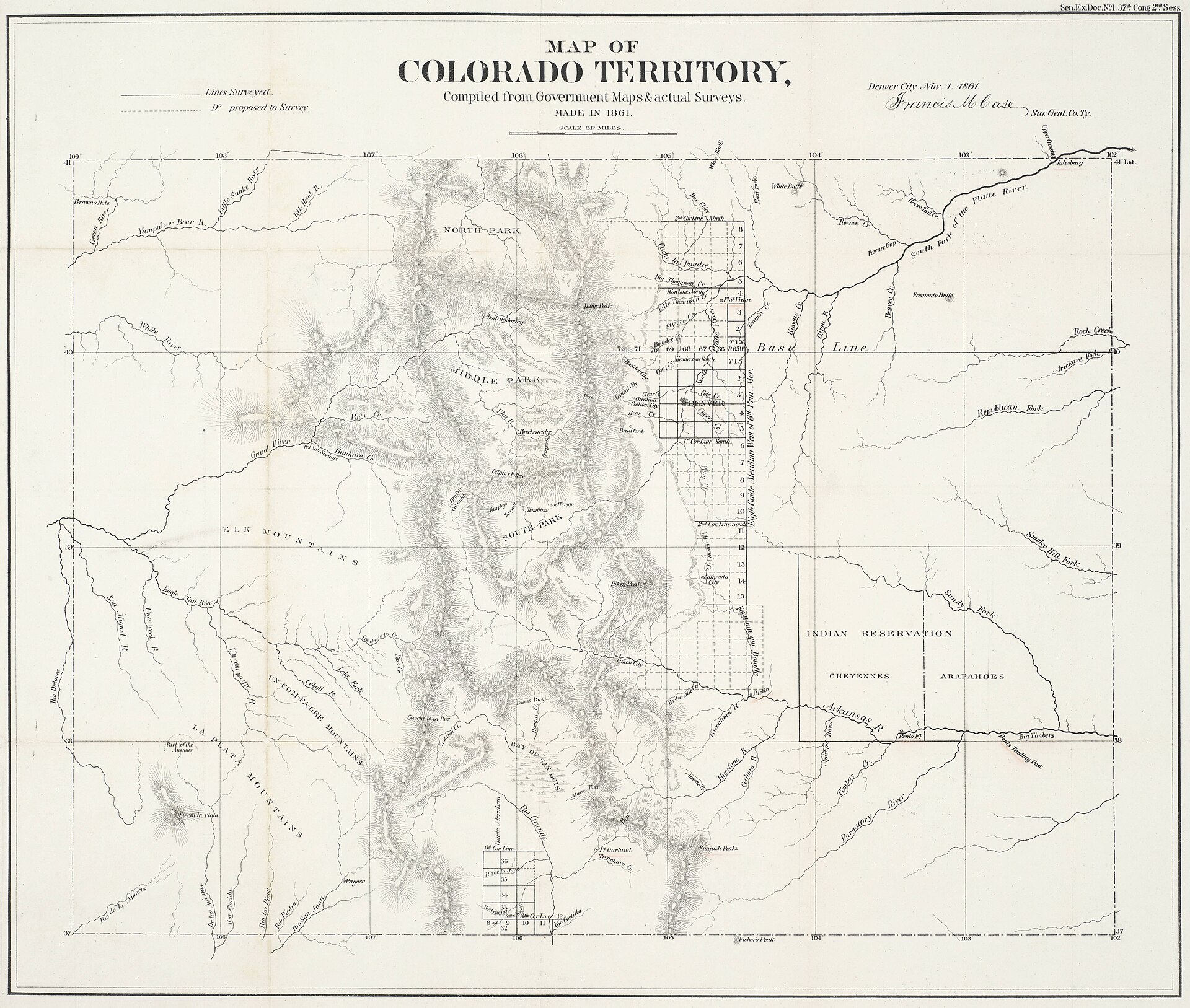
Colorado Territory was organized in February 1861. On 2 August 1861 — with the Civil War four months old and the territory's loyalties genuinely divided — delegates from three lodges convened at Golden City and formed the Most Worshipful Grand Lodge of Ancient, Free and Accepted Masons of Colorado.
The founding lodges took the numbers they still hold:
- Golden City Lodge No. 1 — Golden. Still at labor today; the oldest lodge in Colorado.
- Summit Lodge No. 2 — originally at Parkville, a town that the dredges and the mountains have since erased almost completely; the lodge later moved to Breckenridge.
- Rocky Mountain Lodge No. 3 — Gold Hill, Boulder County.
Denver's lodge, the territory's first, was rechartered under the new Grand Lodge as Denver Lodge No. 5.
Colorado would not become a state until 1 August 1876 — the centennial year that gave it its nickname. For fifteen years, the Grand Lodge was one of the few territory-wide institutions that actually worked.
The First Grand Masters — Including One We Do Not Celebrate
The first Grand Master elected by the new Grand Lodge, in 1861, was John M. Chivington, a Methodist minister who would shortly become a colonel of Colorado volunteers. He was followed by Allyn Weston in 1862 and by Henry M. Teller in 1863.
Chivington's name is not one Colorado Masons say with pride. In April 1862 he won real distinction at Glorieta Pass in New Mexico, where his detachment's destruction of the Confederate supply train ended the Southern campaign for the Southwest. Two and a half years later, on 29 November 1864, he commanded the volunteers who attacked a peaceful encampment of Cheyenne and Arapaho at Sand Creek and killed roughly 150 people, most of them women and children. Congressional and military investigations condemned the attack outright. It is one of the darkest events in Colorado's history.
The Craft's own record on this is worth stating plainly, because it is a small piece of honest evidence. A Colorado lodge had been renamed in Chivington's honor during his period of fame; in 1868 the brethren changed the name back to Central Lodge, on account of his collapsed reputation. Masons are not immune to the errors of their age — but the men who knew him best took his name off their door, and it has stayed off.
Teller, by contrast, became the Grand Lodge's steadying hand, serving again from 1867 to 1872. He went on to be Colorado's first United States Senator in 1876 and Secretary of the Interior under President Arthur. He is best remembered nationally as the West's most stubborn advocate for silver — he walked out of the 1896 Republican National Convention at the head of twenty-three pro-silver delegates rather than accept a gold plank.
From Golden City to Broadway Avenue
That silver politics is not incidental to us. The Grand Lodge Teller helped shape spent the 1870s and 1880s chartering lodges into every mining district, rail town, and farm county in the state — and the names those lodges chose tell you what was on men's minds. When twenty-eight Master Masons in Pueblo petitioned for a charter in 1893, they named their lodge Silver State.
The charter was issued 12 April 1893. Two months later the Sherman Silver Purchase Act was repealed, the silver market collapsed, and Colorado fell into the worst depression in its history. The lodge that took the metal's name was born on the eve of its ruin — and is still meeting a hundred and thirty-odd years later, on the second and fourth Thursdays, at Broadway and Evans.
The Grand Lodge of Colorado today comprises more than a hundred lodges and several thousand brethren. It has been continuously at labor since that August day in Golden City in 1861.