
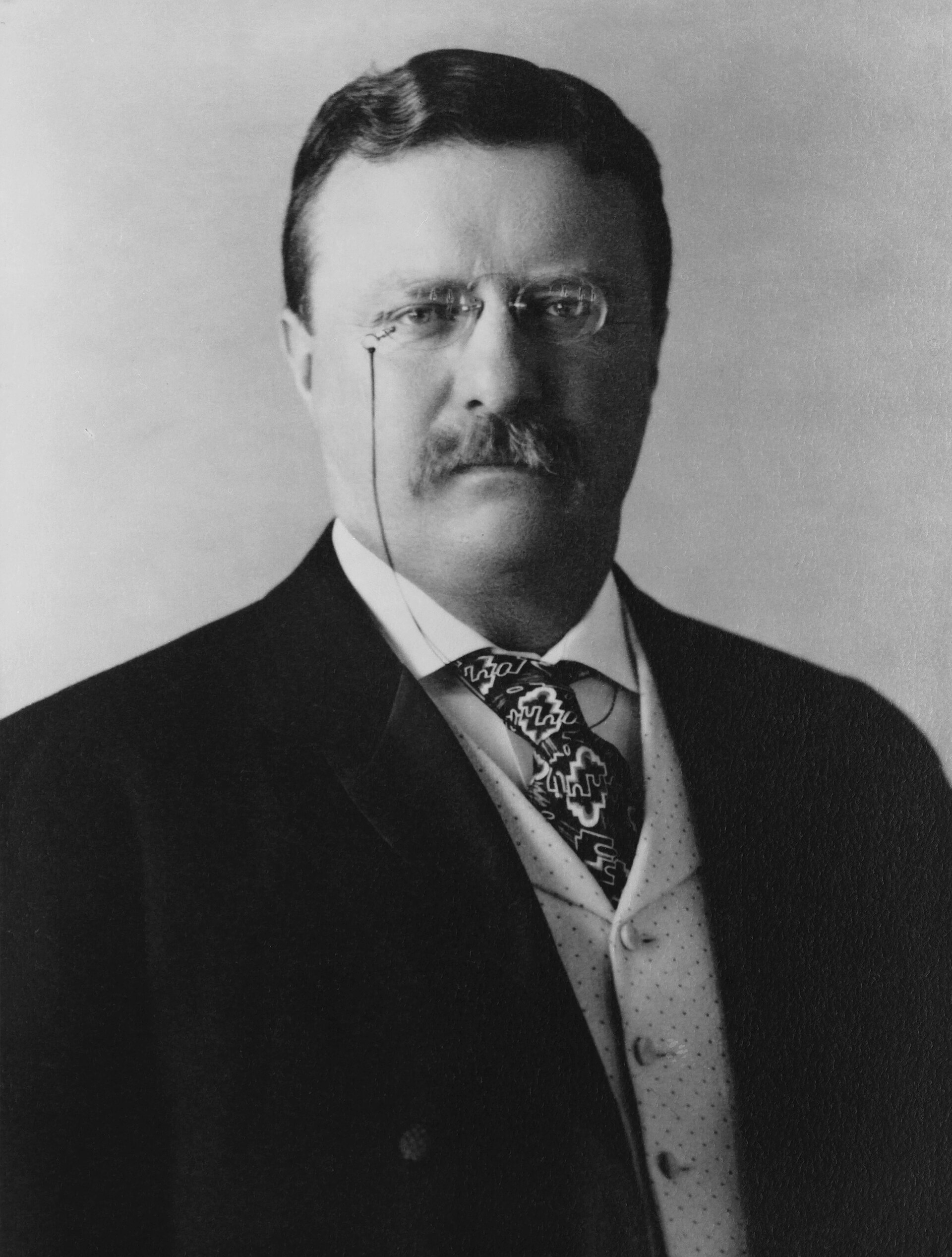
Theodore Roosevelt joined a lodge on Long Island where his own gardener sat in the East. Franklin Roosevelt was raised in a New York lodge and later initiated two of his sons himself. Between them they held the presidency for nearly twenty years, and both said the same thing about why the lodge mattered.
Theodore, and the Gardener in the East
Theodore Roosevelt took his degrees in Matinecock Lodge No. 806 at Oyster Bay, New York, in the early months of 1901, and was raised a Master Mason on 24 April 1901. He was Vice President of the United States at the time.
The detail everyone repeats about it is true, and it is the reason he liked telling the story: the Worshipful Master of Matinecock Lodge was Roosevelt's own gardener, a man who worked the grounds at Sagamore Hill.
So in the lodge room the gardener presided and the Vice President obeyed his gavel. Outside, on Monday morning, the arrangement reversed. Roosevelt found this genuinely delightful and cited it for the rest of his life as the plainest demonstration of what the level actually means — not a slogan about equality, but a room in which a working man rules and a great man sits down when told to.
He attended when he could, visited lodges as he travelled, and was received as an ordinary member. Five months after he was raised, William McKinley was shot at Buffalo and Roosevelt became President.
An Aside on McKinley
The man Roosevelt succeeded was a Mason too, and his story deserves the space.
William McKinley was initiated in 1865 at Winchester, Virginia — in enemy territory, during the war, while serving as a Union officer. What moved him to petition, by his own account, was watching Confederate surgeons who were Masons treat wounded Union prisoners with a care the circumstances did not require, and seeing the recognition pass between men who were supposed to be killing each other.
He asked to join the lodge of the town his army was occupying, and they took him.
Franklin, and the Night He Initiated His Sons
Franklin Delano Roosevelt was initiated in Holland Lodge No. 8 in New York City on 11 October 1911 and raised the following month. He was twenty-nine, a first-term state senator, and eleven years from the polio that would change everything.
Holland Lodge is one of the oldest in the country, chartered in the eighteenth century, and had counted a good many of New York's Dutch-descended families among its members — the Roosevelts among them.
The moment that defines FDR's Masonic life came on 7 November 1935, at Architect Lodge No. 519 in New York. The sitting President of the United States, in the middle of the New Deal, travelled up from Washington to confer the Entered Apprentice degree on his own sons, James and Franklin Jr., in person.
Anyone who has watched a father sit in the East for his son knows what that room felt like. It is among the few things a lodge offers that nothing else can substitute for.
Two Very Different Men, One Argument
Theodore and Franklin were fifth cousins, of opposite parties, and temperamentally nothing alike. TR was a Republican reformer of ferocious energy who ran the Progressive insurgency against his own party. FDR was a Democrat of enormous patience and indirection who built the modern federal state.
They agreed on very little in politics. On the lodge, they said the same thing.
Both were patrician New Yorkers — inherited names, inherited money, Harvard, the sort of Americans for whom every door opened automatically. And both, on their own account, valued the lodge precisely because it was one of the very few places where that machinery switched off. A room where a gardener could rule a Vice President, and where the President's sons were candidates like anyone else's, and where you were addressed as Brother and nothing more.
For a man born inside every advantage, that is a genuinely useful experience, and both of them said so.
What TR Actually Practiced
Roosevelt spoke often about the fraternity, and the line he returned to was about meeting on the level — that a man is to be judged by what he is and does, not by his birth, his trade, or his bank balance. It is an ordinary Masonic sentiment. What makes it worth quoting from him is that his public record backs it.
He broke trusts run by men of his own class and social circle. He was the first President to invite Booker T. Washington to dine at the White House — and absorbed a firestorm of racist abuse for it that lasted for years. He mediated the anthracite coal strike of 1902 by bringing mine operators and union leaders into the same room, which no President had done before.
None of that requires a Masonic explanation. But a man who spent his evenings in a lodge run by his gardener had rehearsed the idea somewhere.
The Point for a Lodge Today
The Matinecock story is the most useful thing in this article, and it is worth extracting from the presidential trappings.
A lodge is one of the last institutions in American life where a man's occupation and income are structurally irrelevant to his standing in the room. The Master is whoever the members elected. He may be a machinist, a steelworker, a teacher, a rancher, or a retired sergeant, and the lawyer and the surgeon in the sideline rise when he raps the gavel.
Nearly everything else has sorted itself by income, education, and profession. The lodge, when it is working, has not.
Theodore Roosevelt could have joined anything in America. He picked the room where his gardener was in charge.