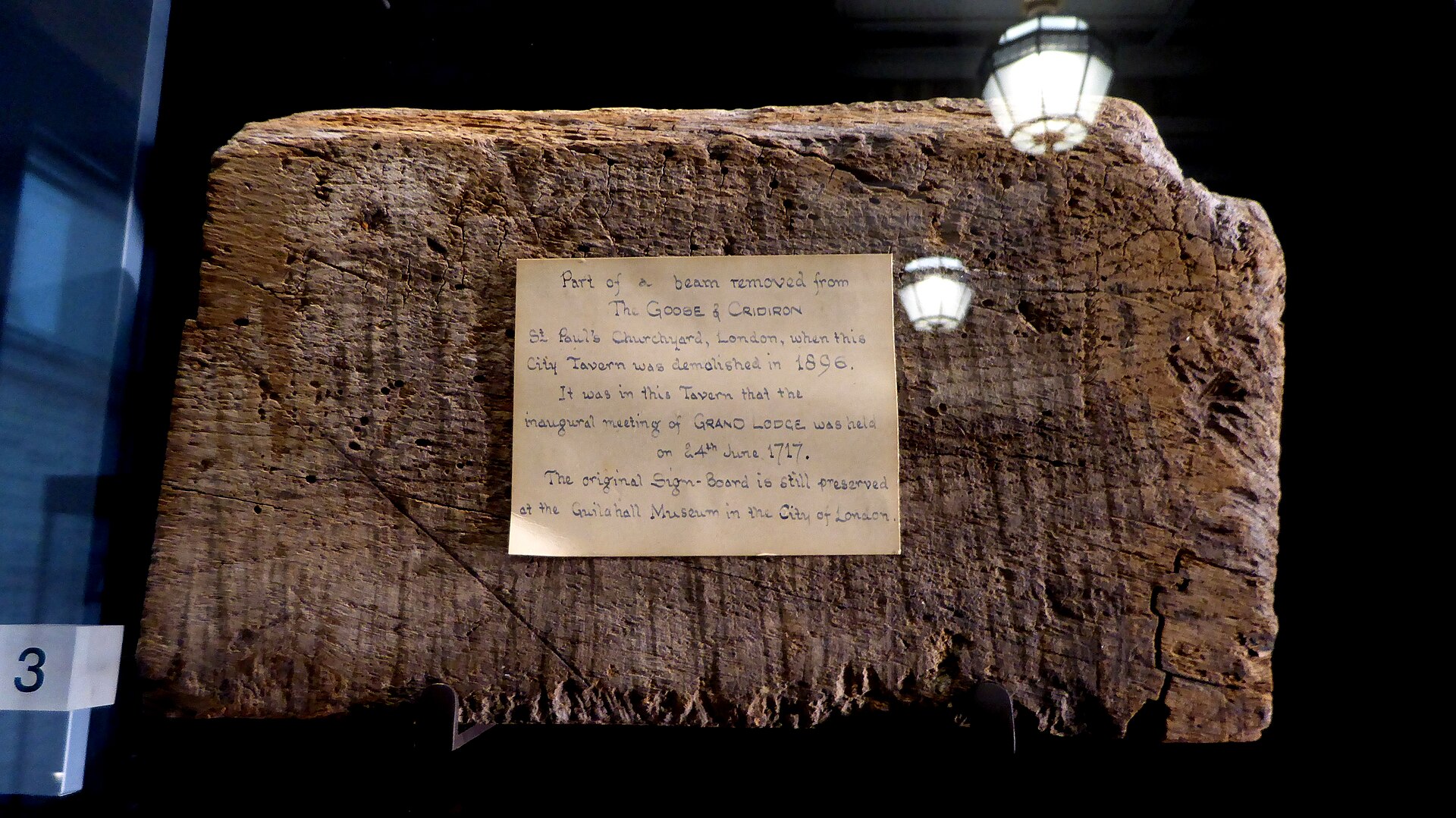
On St John the Baptist's Day, 24 June 1717, four London lodges are said to have met at a tavern in St Paul's Churchyard, dined together, and elected one of their own as Grand Master. Out of that dinner grew every Grand Lodge on earth — including the one that chartered Silver State No. 95 in 1893.
Four Lodges and an Alehouse
The story, as Masons have told it for nearly three centuries, is disarmingly simple. In 1716 the members of four old London lodges — lodges that had already existed for some time, and that were known by nothing more dignified than the names of the public houses they met in — gathered at the Apple Tree Tavern in Charles Street, Covent Garden. There they agreed to revive the quarterly communication and to hold an annual assembly and feast, at which they would choose a Grand Master from among themselves.
The following year they made good on it. On 24 June 1717 they met at the Goose and Gridiron alehouse in St Paul's Churchyard, constituted themselves a Grand Lodge, and elected Anthony Sayer, Gentleman, as the first Grand Master of Masons.
The four lodges were:
- The lodge at the Goose and Gridiron alehouse, St Paul's Churchyard — today the Lodge of Antiquity No. 2.
- The lodge at the Crown alehouse, Parker's Lane, off Drury Lane — long since erased from the register.
- The lodge at the Apple Tree Tavern, Charles Street, Covent Garden — today the Lodge of Fortitude and Old Cumberland No. 12.
- The lodge at the Rummer and Grapes tavern, Channel Row, Westminster — today the Royal Somerset House and Inverness Lodge No. 4.
Three of those four lodges still meet under the United Grand Lodge of England. A Master Mason visiting London today can sit in a lodge whose working predates the Grand Lodge that governs it.
Anthony Sayer, Gentleman
Of the first Grand Master in Masonic history, remarkably little is known. He was styled Gentleman — in the usage of the day, a man of independent means — and was reportedly chosen because he was the eldest Master Mason present. He served a single year, was afterward appointed Senior Grand Warden, and then slipped out of prominence.
What we do know is quietly moving. Sayer fell on hard times. The Grand Lodge minutes record petitions from him for relief, and the charity fund of the very institution he had been elected to lead paid out to him more than once in his later years. The first Grand Master of the first Grand Lodge died in 1741 and was buried at St Paul's, Covent Garden.
It is a fitting first chapter for a fraternity that would make relief one of its three principal tenets. The Craft's earliest ruler was also one of its earliest beneficiaries — and the brethren did not look away.
A Word of Honest Caution
Good Masonic history is honest about its evidence, and the evidence here is thinner than the confidence of the retelling suggests.
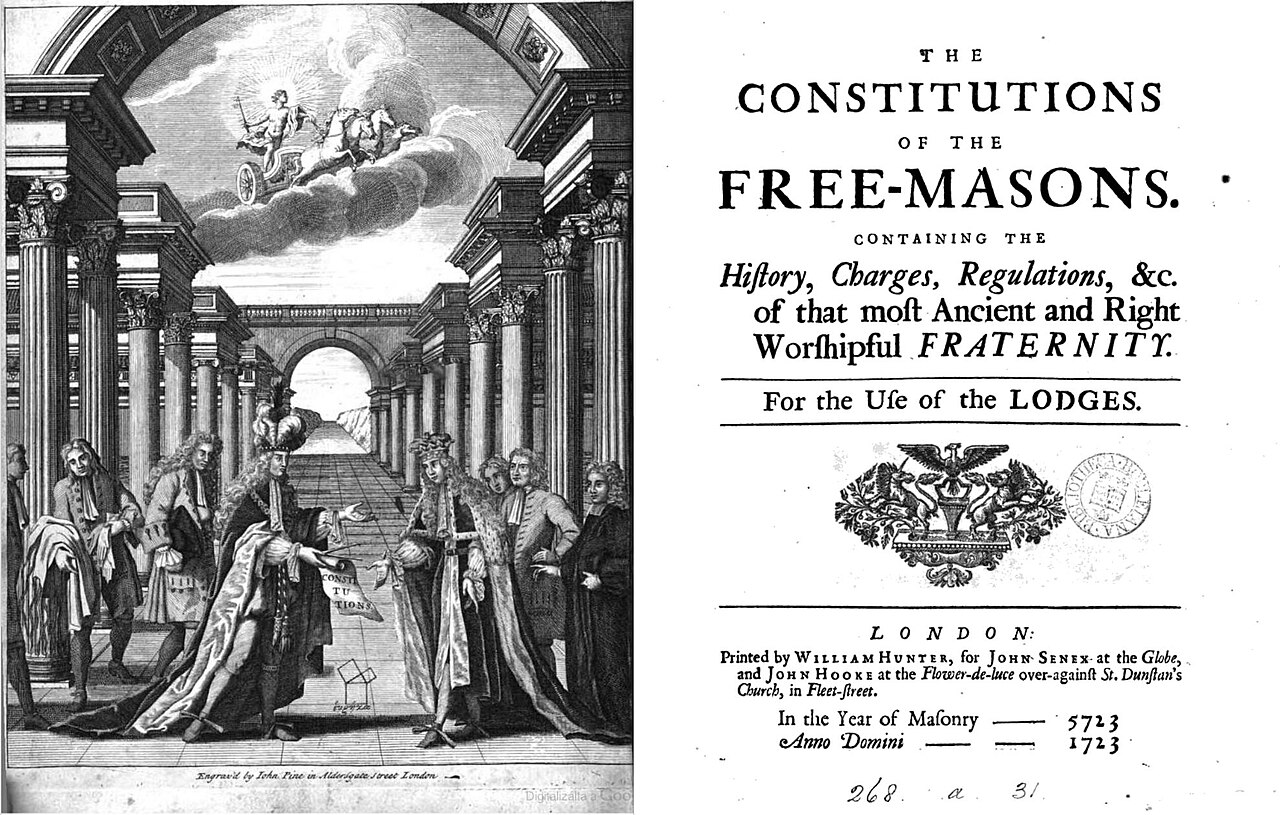
The entire 1717 narrative — the Apple Tree, the Goose and Gridiron, Sayer's election — reaches us through a single source: the second edition of James Anderson's Constitutions, published in 1738. Anderson was writing twenty-one years after the fact about a meeting he did not attend. His first edition, of 1723, does not tell the story at all. Nor do the pamphlets, newspaper notices, and exposures printed in England between 1721 and 1738 mention the founding meeting or the tavern.
Some of Anderson's supporting numbers are also suspiciously tidy. His count of lodges climbs by exactly four every quarter through 1721 and 1722 — twelve, sixteen, twenty, twenty-four — a regularity that looks more like arithmetic than record-keeping.
Because of this, a serious body of modern scholarship — much of it published through Quatuor Coronati Lodge No. 2076, the world's premier lodge of Masonic research — argues that the organization we would recognize as a Grand Lodge really took shape around 1721, when the Duke of Montagu became Grand Master and gave the body its first noble patron, and when the work that became the 1723 Constitutions was set in motion under Jean-Théophile Desaguliers. On this reading, 1717 may be a genuine but modest tavern agreement that Anderson later dressed in constitutional clothing.
None of this diminishes the anniversary. It sharpens it. The Craft teaches a man to seek truth and to be plain about what he does and does not know — and applying that standard to our own origin story is precisely the sort of labor a Mason ought to welcome.
Why It Reached Pueblo
The significance of 1717 is not that Freemasonry began there. Scottish lodges kept written minutes more than a century earlier, and the Regius Manuscript pushes the Old Charges of the operative craft back to roughly 1390. What began in 1717 was something genuinely new: a Grand Lodge — a governing body of lodges, empowered to warrant new ones.
That single administrative invention is what let the Craft travel. Warranted lodges could be constituted anywhere a group of Masons settled, carrying a document that tied them back to a recognized authority. Within fifty years the pattern had crossed the Atlantic; within a hundred and fifty it had reached the mining camps and railroad towns of the Rocky Mountains. The Grand Lodge of Colorado was formed in 1861, and on 12 April 1893 it issued the charter that made twenty-eight Pueblo Master Masons into Silver State Lodge No. 95.
Every one of those charters is, in the end, a descendant of a dinner in a London alehouse.