
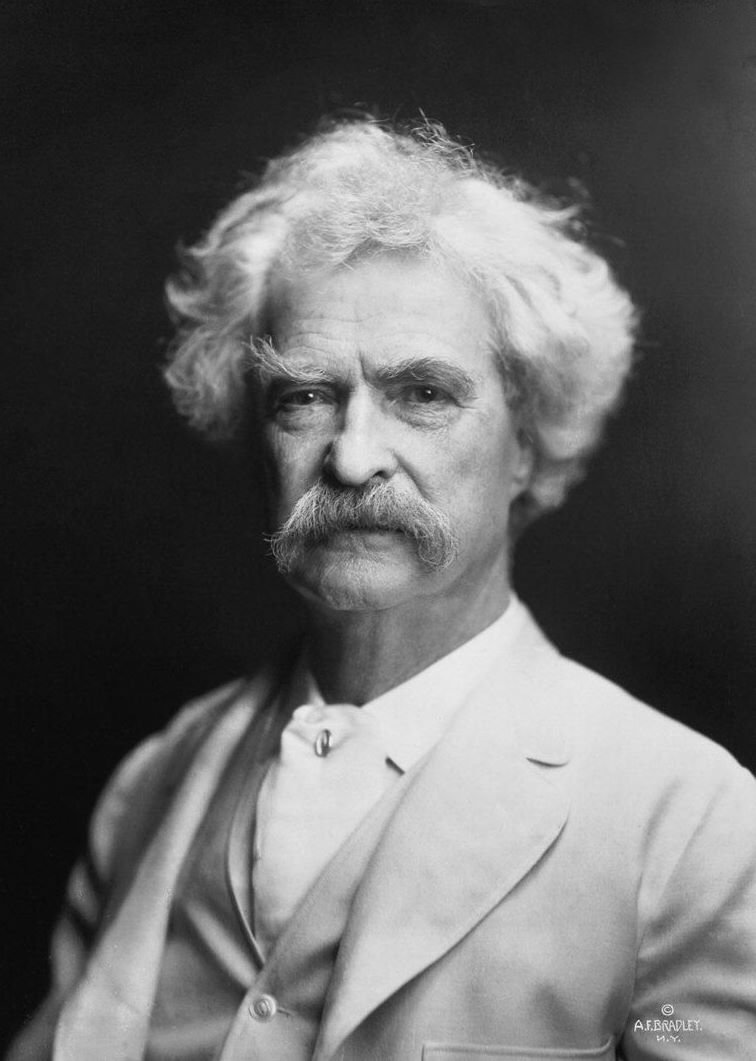
Samuel Clemens was raised a Master Mason in a St. Louis lodge full of river pilots in July 1861, cut a piece of cedar in Lebanon six years later and had it made into a gavel for his lodge, and then quietly demitted and never came back. All three facts are worth having.
A Lodge of Pilots
Clemens petitioned Polar Star Lodge No. 79 of St. Louis on 26 December 1860. He was twenty-five, and he was a licensed Mississippi River pilot — the best job he would ever have, and the one he wrote about for the rest of his life.
Polar Star at that time was substantially a pilots' lodge. That detail explains a great deal. River piloting was a closed guild of highly skilled men who held one another's lives in their hands, memorized enormous quantities of material, examined newcomers rigorously, and depended absolutely on recognizing a competent man when they met one. A Masonic lodge would have felt entirely familiar.
He received the Entered Apprentice degree on 18 February 1861, was passed in June, and was raised a Master Mason on 10 July 1861.
Note the calendar. Fort Sumter had been fired on in April. By the time Clemens was raised, the country was at war, the river trade was collapsing, and his career as a pilot was finished. Within weeks he would spend a brief and famously inglorious fortnight in a Confederate irregular company, and then leave for Nevada with his brother — the journey that turned a river pilot into a writer.
The Gavel from Lebanon
In 1867 Clemens sailed on the Quaker City excursion to Europe and the Holy Land — the trip that produced The Innocents Abroad and made him famous.
In Lebanon he did something that only makes sense if the Craft was on his mind. He obtained a piece of cedar and had it made into a gavel, which he sent home to the Worshipful Master of Polar Star Lodge. The inscription reads that the mallet is of cedar cut in the forest of Lebanon, whence Solomon obtained the timbers for the Temple.
Consider what that is. Every Master Mason has heard about the cedars of Lebanon and Hiram, King of Tyre. Clemens — a man constitutionally incapable of taking anything solemnly — stood in the actual place, thought of his lodge, and sent back a working tool made of the actual wood.
Whatever his complications about religion and institutions, and he had a great many, that gesture was not ironic.
The Part That Gets Left Out
Twain's Masonic membership was not lifelong, and a lodge that tells his story honestly has to say so.
He fell out of good standing during the Nevada and California years — he was a very long way from St. Louis, broke, and moving constantly. He petitioned for reinstatement in April 1867 and was restored, shortly before the Quaker City sailed.
And then, in 1869, he demitted. He was thirty-three, about to marry Olivia Langdon, about to become the most famous writer in America, and moving east for good. So far as the records show, he never affiliated with another lodge and never returned.
He left no bitter statement about it. There was no quarrel and no scandal — he simply moved away and let it lapse, the way a great many men have, before and since.
What He Actually Wrote About It
Twain is one of the most quoted men in the English language, and he is quoted about Freemasonry constantly — usually with lines he never wrote. The internet has attributed a small library of noble Masonic sentiments to him, most of them invented, some of them by people who ought to know better.
The honest position is that his surviving Masonic correspondence is warm and slight: letters to his lodge, the gavel and its inscription, references in his notebooks. He did not write a treatise on the Craft, and inventing one for him is exactly the sort of thing he would have skewered in print.
What he did write about, at enormous length, was the moral education of ordinary people — the conscience of a boy on a raft deciding to go to hell rather than turn in his friend, the difference between what a community says it believes and how it behaves, the hypocrisy of respectable men. That is the material. Anyone looking for Twain's real moral seriousness will find far more of it in Huckleberry Finn than in a fabricated quotation about the square and compasses.
Why He Belongs Here Anyway
Because his is the ordinary Masonic biography, and the ordinary one is worth telling.
Most men are not George Washington or Paul Revere. Most are like Clemens: they join young, in a lodge full of men from their trade, at a moment when they need a place to belong. They mean it while they are there. Then life picks them up and puts them down somewhere else — a new city, a marriage, a career that takes off — and the lodge is four hundred miles behind them.
The gavel is the point. Six years after he was raised, on the other side of the world, at the height of his first real success, Samuel Clemens was standing among the cedars of Lebanon thinking about a lodge room in St. Louis.
Every lodge has men on its roll it has not seen in years, and men who demitted and moved on. It is worth remembering that the Craft can matter to a man permanently without him ever walking back through the door — and worth remembering, too, that a note from his old lodge might have brought him.